
The Step Most Home Builders Skip - and Pay for Later
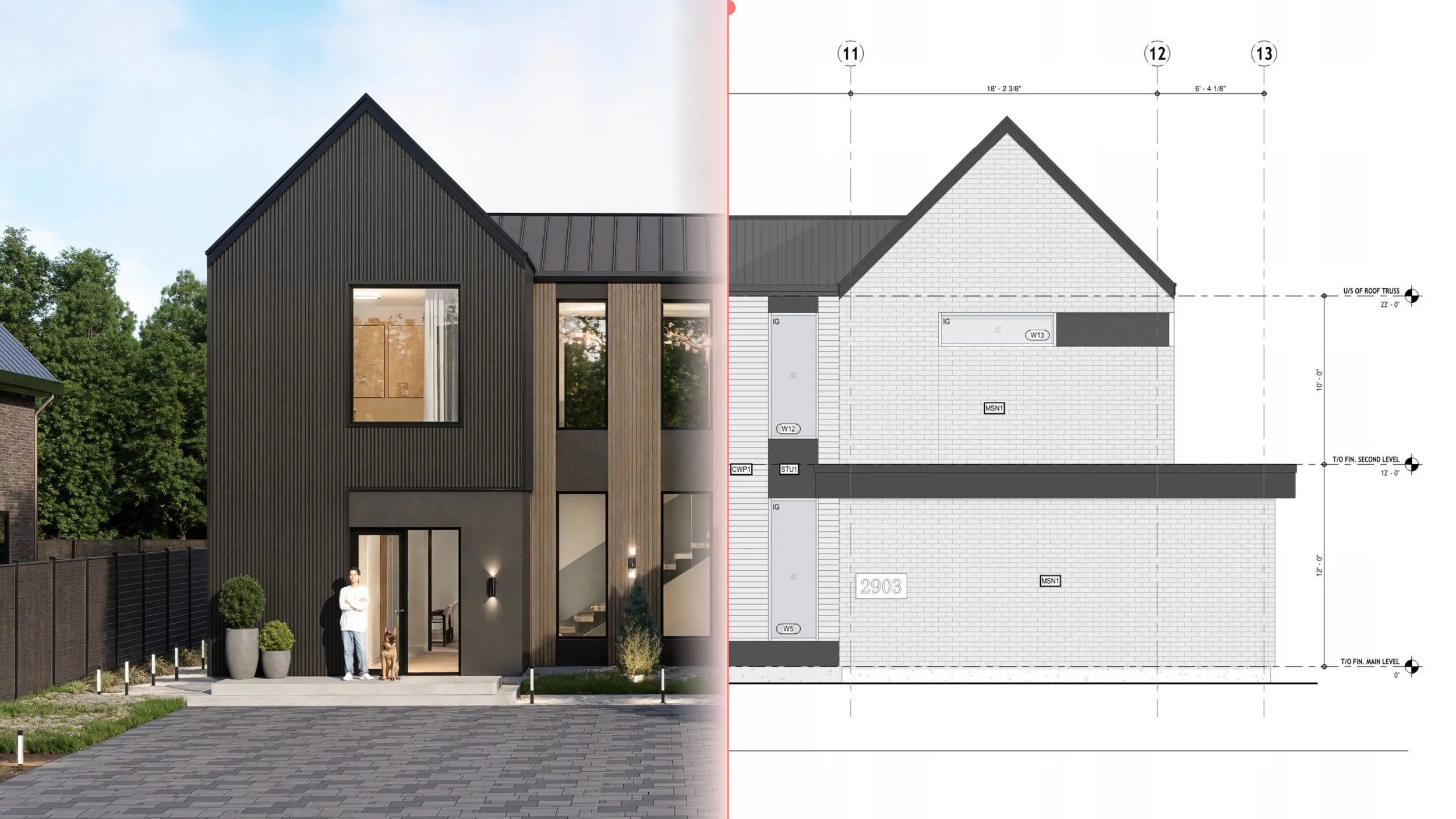
Architectural Visualization from a Homebuilder’s perspective.
How Homebuilders Use 3D Visualization to Reduce Delays, Rework, and Second-Guessing
Most design delays don’t happen because drawings are wrong — they happen because decisions aren’t fully understood.
Custom home builders deal with this constantly: clients who approve layouts and elevations, only to second-guess them weeks later. What starts as uncertainty in the design phase often turns into impulsive changes during permitting - or worse - during construction. By that point, every revision carries real cost, real delays, and real frustration on site.
In most cases, this isn’t because clients are careless or difficult. It’s because they were never given the right tools to feel confident when signing off on the final design.
It’s Not the Client’s Fault — Most People Just Can’t Visualize Space the Way We Do
As trained professionals, we spend years learning how to translate lines into space. We read plans, elevations, and details almost instinctively. Most homeowners don’t.
In fact, research in cognitive psychology suggests that only a small percentage of the population has strong 3D spatial visualization ability, with many studies estimating that less than 20–25% of people can reliably visualize complex three-dimensional space from 2D drawings alone. The majority rely on contextual cues, perspective, and experiential references to understand space.
Yet in our industry, we often assume that clients “see” what we see.
When they hesitate, change their mind, or struggle to commit, it’s rarely indecision — it’s uncertainty.
What the Client Actually Sees
To demonstrate this point, take an excerpt from one of our MuRo Select Homes catalog models - The Verta
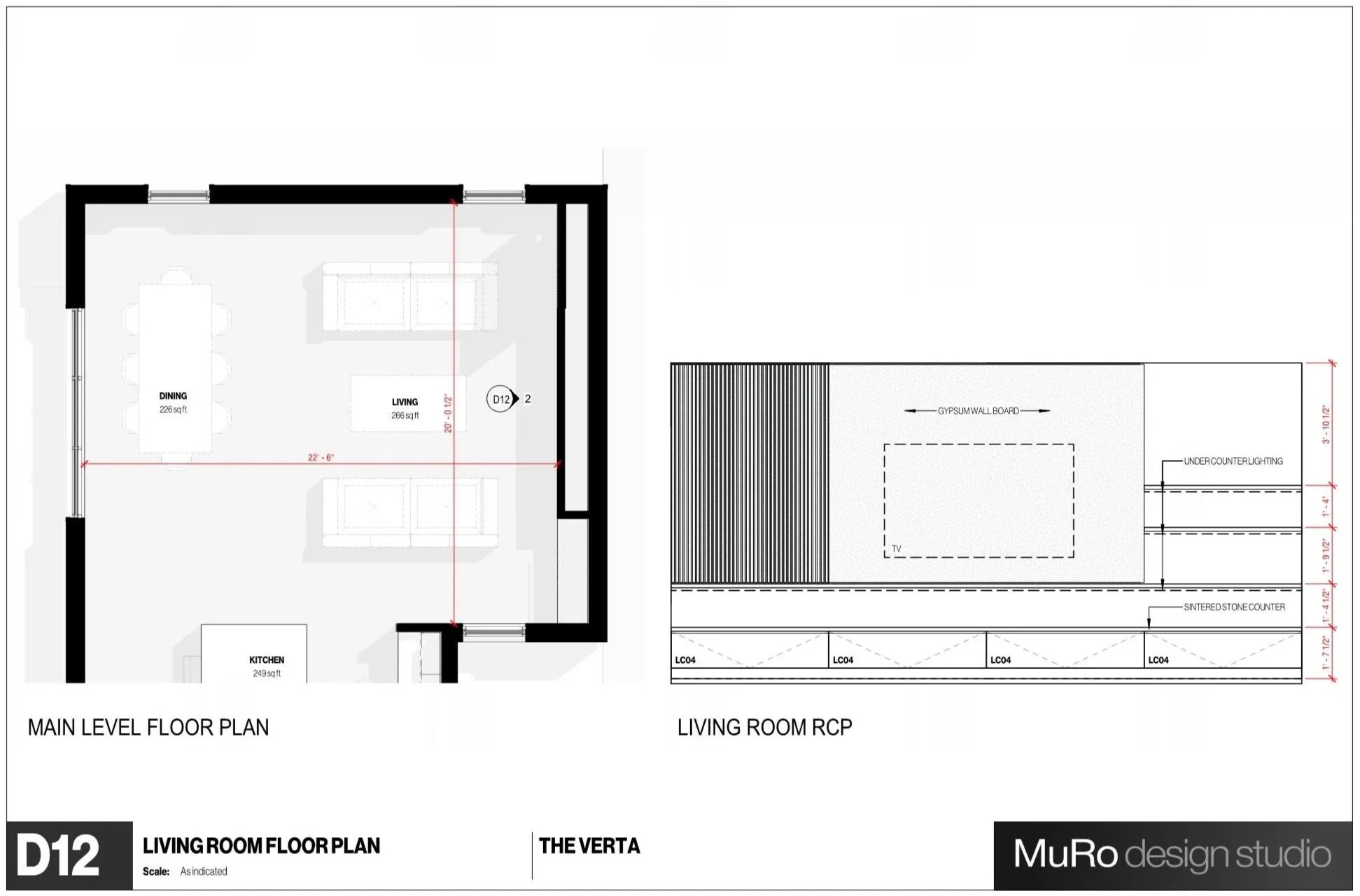
What you see above is what most designers/builders typically show to clients during the design approval process:
A Floor Plan - showing layout and dimensions
An Interior Elevation - showing intent and style
Verbal explanations filling in the gaps
While this is enough for professionals, the typical homeowner can feel stuck piecing these drawings together to complete the puzzle. It also leaves unanswered questions about scale, light, material transitions, and how spaces actually feel. Compare the above 2D drawings excerpt to the rendered image below:

‘The Verta’ Living Room
Same design. Two distinct presentation methods. Vastly different levels of clarity.
Imagine the difference in the mental load required for the average person to understand this space.
This gap is where most late-stage changes begin. This is why we must learn to see the home through our client’s perspective.
Plans Are Essential — But They Leave Room for Interpretation
Plans and elevations are foundational. They communicate layout, code compliance, and design intent. But they don’t communicate experience.
From a client’s perspective, drawings still require interpretation:
How open does this space really feel?
How close does that window feel to the neighbor?
How do materials actually come together?
What does this look like at eye level?
Those unanswered questions don’t disappear — they resurface later as revisions, RFIs, or site conversations that could have been avoided earlier.
Where 3D Visualization Helps Builders the Most
Used early in the process, architectural visualization becomes a coordination and decision-making tool — not just a presentation asset.
For builders and developers, this means:
Faster client buy-in and clearer sign-offs
Fewer late design changes driven by uncertainty
Better alignment between designer, builder, and client
Cleaner pricing scopes, with fewer assumptions baked in
When everyone is reacting to the same visual information, conversations become more concrete and decisions stick.
A Powerful Marketing Tool — Especially for Spec Homes
For spec and developer projects, visualization plays an additional role: selling the feeling of the home before it exists.
While people buy commercial properties for investment, people buy Homes with emotion. Buyers need to feel the space - not just understand it.
Quality visualizations allow buyers to:
Imagine daily life in the space
Picture family gatherings, light, and atmosphere
Emotionally connect before construction is complete
For builders, this means:
Pre-selling or generating interest earlier
Stronger website and social media content
Clear, compelling visuals for “upcoming projects”
Imagine if you could offer a client a Matterport-Style VR walkthrough of a home before its even built? The good news is: you absolutely can!
Check out this Sample Walkthrough of our Verta model and ask yourself, would a buyer be more likely to buy a home when presented this, or solely a floor plan?
The Result: More Confidence, Fewer Surprises, Smoother Projects
When clients truly understand what they’re approving, projects tend to move forward with less friction. Design decisions happen earlier, changes happen less often, and construction flows with fewer interruptions. Used intentionally, architectural visualization isn’t about making projects look better — it’s about helping them run better.
